Saturday, June 29, 2019

Launching a website

Coordinators from Academia.com, a site that I use extensively in my quests, offered me to launch my website under their auspices. It is called https://independent.academia.edu/BaizermanMichael

I decided to upload most of my articles published on other sites. I started with the extracts from my first book, "Dawn and Sunset: A Tale of the Oldest Cities in the Near East". Up to now, I have transmitted four chapters:
The Divine Round Dance: The Sumerian Astronomical Calendar. This is a chapter from Unit IV, Beyond the Threshold of Rain Agriculture; it explains the importance of the introduction of the calendar in the complex society, who was in charge to keep the records, and what impact on state affairs it produced. https://www.academia.edu/39608575/The_Divine_Round_Dance_The_Sumerian_Astronomical_Calendar 

The Birth of Proto-writing. This is a chapter from Unit III, The Marvels of the Sumerian Script; it looks into the origins of cuneiform, arguably the earliest human script. A universal writing agent, it was invented by accountants to submit economic reports to their superiors. https://www.academia.edu/39623193/The_Birth_of_Proto-writing 

The Tower of Babel is a chapter from Introduction; it presents an attempt of interpretation of the iconic Biblical passage. https://www.academia.edu/39660169/Book_I_Intro_The_Tower_of_Babel

In the Workshop of a Sumerian Sculptor is a chapter from Unit V, Arts and Crafts; it relates the story of Sumerian sculptures in terms of main characters and dominating styles. The artistic side of early urban society comes to life in a series of sketches. https://www.academia.edu/39689480/In_the_Workshop_of_a_Sumerian_Sculptor

You're welcome to view them all; there will be more extracts. 

Meanwhile, I began collecting material from my third project. It is still untitled and will delve into the early modern seafaring, especially the launching of the sea route to India at the end of the 15th century. My first research question is why the Portuguese mariners played no role in the Mediterranean seafaring during the Late Middle Ages. Many more questions will follow. The research will take a few years. Wish me good luck!!!

Friday, June 21, 2019

My Canaanite Legacy


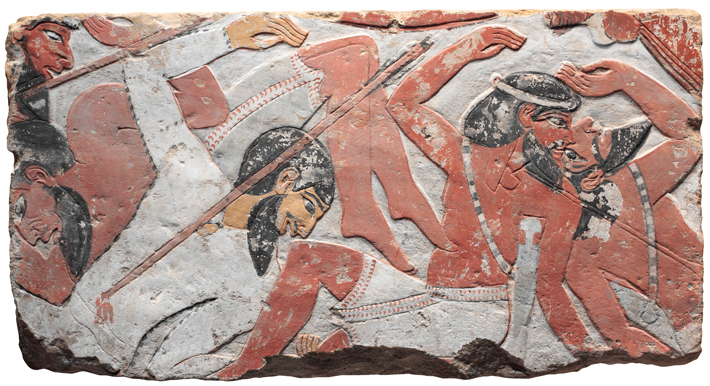
Jaffa Thebes Limestone Relief
Defeated Canaanite warriors from the painted limestone relief at Thebes

After completing my second book, "The Enchanting Encounter with the East", I returned for a while to the old plan and started to browse evidence concerning Early Israel in hope to find material for a short article. 

In the course of my recent quest, I haven't put my finger on a particular plot but I realized that the origins of Israel are hidden much deeper than their first emergence on Merneptah Stela. I believe that the People of the Book made up an offshoot of the robust tree of the West Semites and their culture sprang up from the common Canaanite background.

I was born in Moscow but my heart has driven me to the Land of Canaan. That happened years after I had repatriated to Israel, raised a family, and embarked on an ungrateful career of a high-school teacher. 

My fascination with Canaan began with the search for the origins of Early Israel. I penned an account about Exodus, where I defined this tale as a foundation myth and established a firm link between Proto-Israelites, who flooded the highlands at the climax of the Late Bronze Age (13-12 centuries BCE), and their lowland neighbors. You can view 'The Generation of Exodus'  at scriggler.com/DetailPost/Opinion/26251
You can also take a gander at my second report, 'Mesha the Dibonite Recovers His Voice', which is available at  scriggler.com/DetailPost/Opinion/27980

I asked myself: if these Proto-Israelites were part and parcel of a local ethnic Landschaft, which features of their background could prove it beyond reasonable doubt? In plain English, who were the Canaanites and what was their legacy that I can claim- in due respect- as my own? 

I have not found the answers because it's time to think about my third book. I am hopeful to return to this issue sometime in the future. 

Friday, June 14, 2019

Canaan


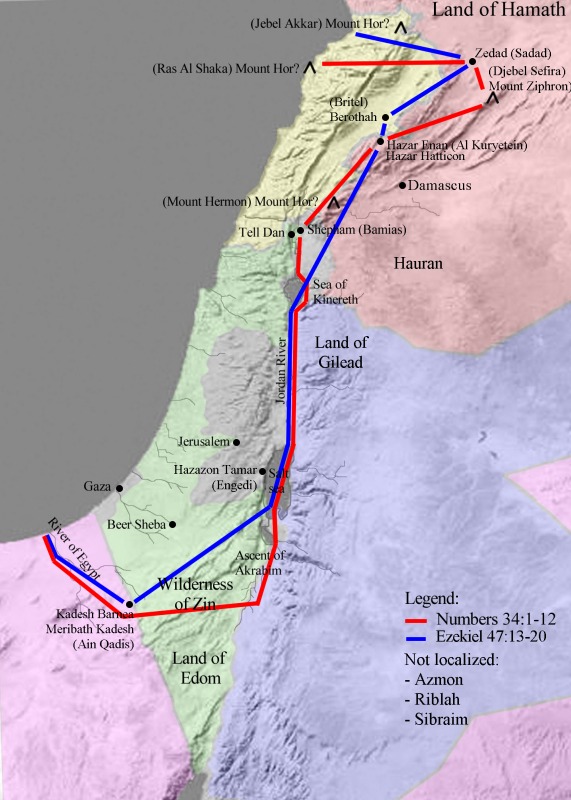
Image: The Map of Canaan According to the Bible

After finish my second book, The Enchanting Encounter with the East, I needed to take a break, approximately from mid-May to the end of June. That was the finish of the school year, so I had plenty of time on my hands. My idea was to pick up a momentous episode from the history of early Israel. This is the topic of my fourth book. 

I found so much data that it would take months, if not years, to process it. However, I became aware of what this future volume would be about. 

I support the idea that early Israel was part and parcel of Canaan, a narrow land bridge stretched between Western Asia and Egypt. Surrounded by stony deserts, it belonged to the occidental leg of the Fertile Crescent. Splashed by the great wine-dark sea, this land occupied a chunk of the eastern Mediterranean. 

This spatial corridor, craved by quite a few great powers of the ancient world and giving easy access for invaders, was populated by an array of diverse ethnic groups that shared a similar culture, language, and religion. In the Late Bronze Age (c. 1500-1200 BCE), it was swallowed by the expanding Egyptian Empire. 

My future article will focus on Canaan and Canaanites, emphasizing their common features as they are disclosed in the archeological digs committed to the periods of Middle Bronze (c. 2000-1500) and Late Bronze. Now, I am looking for any piece of information concerning the geography of the region. Later, I will check on other aspects of the topic: political development, languages & ethnography, agriculture, arts & crafts, foreign trade, social classes, law & order, warfare, and diplomacy. 

At first glance, this path resembles that of my first book, Dawn and Sunset: A Tale of the Oldest Cities in the Near East. However, in this case, the whole topic is designated as an introduction to the history of ancient Israel. In my view, the origin of the 'people of the Bible' is rooted in the local soil. 

Unfortunately, I will have to stop my quest in the near future on behalf of my new research about the Portuguese seafarers searching the maritime path to India. That is the topic of my third book. I have already written several articles about this theme but now I need to have a closer look. 

I promise to keep you informed about further developments. I appreciate any comments which can help me create a good book. 

Friday, May 24, 2019

The Scourge of God


Image: The Fair Death of Prester John in a Mounting Battle Against Chinggis Khan 

The following chapter ushers in a new metamorphose of Prester John's character. A powerful potentate functions as an underdog in his fight against the Mongols. The new episode is connected to the all-out war in the eastern steppes, in the course of which Chinggis Khan managed to unite 'felt-walled' nomads into an invincible army. Here goes an extract:

“A clever fighter is one who not only wins but excels in winning with ease.” (-Sun Tzu) 

     The steppe is a swath of grasslands extending east and west for thousands of unbroken miles between Manchuria and Hungary. The poor soil unable to sustain peasants toiling in their allotments suffers from the scorching sun in mid-summer and freezing cold in mid-winter.

     The Mongols were a mixed blend of pastoral groups and individuals of diverse ethnic origin. From times immemorial they had followed their flocks and herds in a constant quest for tasty grass and sweet water, moving across the prairies at a pace of swapping seasons. Not as organized as professional soldiers and not as drilled as reserve units, they maintained their own merits like amazing endurance to hardships and expertise at horseback shooting.

       Intrepid hunters, they often merged into para-military factions to plunder the people of the sown. Nomadic assaults against settled quarters had always brought grave damage. However, both the ability of the ground troops to repel these incursions and the willingness of cautious leaders to buy the obedience of mounted archers kept the vandalism at the tolerable level.

      The vagaries of the nomadic lifestyle dispersed these hunters and herders throughout the length and breadth of the boundless steppe. It took the genius of the leader in the making to consolidate them into the well-oiled military machine braced for carrying out his legacy: to incorporate the fearless warriors into the ruling elite of the largest intact land empire on earth. He strove to switch the military strategy from episodic mounting raids in time of need to the full-time occupation of the controlled territories.

       The world still remembers Chinggis Khan by his resounding title which means the ‘ruler  of the universe’.  It might have been copied from the Son of Heaven, the Chinese royal designation which denotes a semi-divine sovereign possessing a cosmic mandate of absolute power.

     The realm into which the infant called Temujin was born shaped him as the unchallenged leader of the people residing in felt-walled tents. The third son of his father, Temujin endured a tempestuous childhood. At the age of nine, he was bereft of his father while his immediate family-two widows with seven kids on their hands- were abandoned by their clan. With nothing to fall back on hard times, they lived on the edge, sustaining on fishing, hunting, and scrounging to meet the needs of basic existence.

Friday, May 17, 2019

Enchanting Encounter with the East

I have crossed a Rubicon meaning that my second book is complete. 
It includes 29 chapters, to say nothing about summing-ups at the end of each of its 6 units. 
The manuscript comprises over 90 K words,  hundreds of notes, and more than 30 images.

'The Enchanting Encounter with the East" tells a story of inter-cultural relations between Latin West and the Far East related from the European point of view. The scenario occurred in the Late Middle Ages when the actual dialog between the two opposite ends of the 'human planet' had become possible due to the opportunities of the Pax Mongolica. However, many European literati were still holding outdated views on the world beyond Islam and were fed by false rumors about the latest developments on the eastern rim of the known world. These legends are passed through generations until they eventually recede, giving up to the outlook based on personal experience of travelers and distinction between the sacred and the profane. 

Unit I focuses on different images that relate to the shape of the Earth, its circumference, and the length of the known world.
Unit II presents the three continents, defines the center, elaborates on the skin color and its implications, as well as recounts the story of the Antipodes.
Unit III narrates the Mongol invasion in eastern Europe and the attempts of the Apostolic See and Crusaders to break the ice with the new powerhouse.
Unit IV gives an account of the legend of the Iron Gates, combining Alexander the Great, Ezekiel, Apocalypses, nomadic tribes, the Ten Lost Tribes, and Gog and Magog. 
Unit V describes the legend of the Prester John in several versions relating to recent developments in Central Asia and Mongolia.
Unit VI records the collective experience of European travelers who came into contact with the Mongol Empire, India, and China. The new experience threw a great shade on the development of Western knowledge of the world. 

I wish you could read the book and discuss its ideas. Meanwhile, I need some rest before starting my third book. 


Friday, March 1, 2019

Waiting for the Train That Would Never Come: The Fifth Crusade

Capturing Damiate.jpg
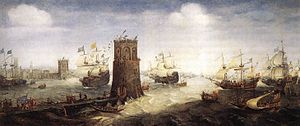
Image: The Crusaders' maritime charge against the Tower of Damietta, Egypt

The main enemy of a string of Crusader kingdoms spread along the coast of Palestine was the Mamluk Sultanate based in Egypt. The Fifth Crusade was spearheaded against the hostile power in hope to wrest control of the Holy Land.    

The stalemate stirred unjustified hopes for the global assault against the Muslim world. King David, Prester John's successor, was destined to play one of the leading roles in this campaign. The following extract describes the confused ambiance prevaling among the Crusaders who pinned their hopes on a non-existent savior: 

"After yielding Jerusalem to Salah ad-Din, better known in the West as Saladin, in the wake of the battle of Hattin, the Latin dominion in the Outremer was reduced to a narrow coastal strip stretching from Jaffa to Antioch. The costly enterprise was in constant jeopardy of extinction. Full of determination to turn the tide in the permanent confrontation with Islam and restore the Christian sway over the Holy City, the pope summoned the Lateran Council to proclaim a fresh crusade. 

The bloody military engagements of the Fifth Crusade pitted the motley host gathered from diverse parts of Europe against the standing army of the sultan of Egypt assisted by his royal brothers, the rulers of Syria and Mesopotamia.

One of the most acute problems of this Crusade was the lack of the charismatic leader who could tame the indomitable energy of rank-and-file warriors and guide them to carry out the Mission Impossible of conquering Egypt.

The participants were waiting to no avail for the arrival of the ultimate commander-in-chief, the potentate of the Holy Roman Empire Frederick. For lack of the better, the crusaders agreed to nominate King John of Jerusalem, who was put in charge of the siege of Damietta, a bustling port in the Nile Delta and the gateway to Egypt. A shrewd political leader, the monarch understood that there were not enough troops under his command to subdue the land of the pyramids, which became the transit goal of the occupation force.  

Engaged in the games of honor, the elite commanders would hang their troops in abeyance rather than in action. Meanwhile, famine and pestilence, ravages of weather and hostile attacks took a heavy toll on common fighters.

This bout of inactivity put the invading host at low ebb. Jacque de Vitry, the bishop of Acre and one of the crucial propagandists of the Crusade, recalls that most of the participants "were in the grip of despair." (41) Besides, the number of fighting troops would melt in a seasonal Ferris Wheel of arrivals and withdrawals since the sum of quitters had far surpassed the stock of newcomers. The papal fury reached white heat and a handful of the departing leaders were excommunicated.

The Crusaders’ initial task was to seize Damietta, a river port city perched between the eastern branch of the Nile and a lake, with the year-round access to the Mediterranean. The attackers, who became bogged down in a blockade over the enemy stronghold, were disturbed by occasional bites of the sultan’s relief army. In addition, local pirates endeavored to cut the maritime supply line serving the occupant troops.

The routine of this humdrum existence was interrupted by the arrival of the papal legate Pelagius, who was tossed in the still water like a heavy rock. Those who stood for a fast advance received reinforcement in the person of this energetic bishop who became the guiding spirit of the Fifth Crusade."  

Friday, February 8, 2019

The Mysterious Letter: The Epistle of Prester John

Manuel I Comnenus.jpg
Image: Manuel I Komnenos

The following chapter investigates why the original Letter of Prester John gained so much popularity across the Latin Christendom. The extract belongs to Unit V of my ongoing book, The Enchanting Encounter with the East. 

I'm currently working on Unit VI, the last section which will include five chapters: a general introduction about medieval journeys to the Far East and Inner Asia, John of Plano Carpini, William of Rubruck, John of Montecorvino and the bottom line. 

Sorry for the long interruption in my updates. Here's a new extract: 

Twenty years later, long after the dust of the Second Crusade disaster settled, a bizarre missive was circulating with lightning speed all over the Latin West. Directed to the leading European royal houses, it somehow skipped the most important of all: the Curia Romana. This letter of introduction was penned by the paramount emperor of the Orient who responded to the casual name of John the Priest.
The original version was inscribed in Latin by a West European author and addressed to Manuel Komnenos, the East Roman emperor, a charismatic leader adored by his retinue.
The preamble of the missive deviates from the conventions of diplomatic correspondence, pervading air of arrogant patronage. The writer, who extolls himself as the ‘King of kings and Lord of lords’ denigrates his correspondent, the foreign head of state, to the mock title ‘governor of the Romans’. Moreover, the author censures Manuel’s faith, implying that the Greek ruler allows his subjects to pay him divine homage: “the little Greeks regard you as a god.” 
At this point, Prester John briefs the reader about himself, boasting of his superiority over all current monarchs on earth in terms of his impact, virtue, and wealth. Seated on a high-backed throne, he elaborates on the extent of his boundless empire, announcing that his domain comprises a mosaic of dependent territories: “Seventy-two kings are tributaries to us.” The readers fancied him to govern the world empire since, according to Isidore, the earth includes seventy-two nations speaking the same number of languages.  The sum of imperial provinces bears a symbolic flavor, alluding to seventy translators of the Hebrew Bible and seventy disciples of Jesus.
The royal author labels his realm the Three Indies; it strews across most of Asia, from the borders of Mesopotamia to the unidentified spot where the sun rises over the horizon. The farther province is the land where St. Thomas the Apostle was glorified, i.e. southern India. The overlord’s dominion strings out so far that a traveler needs many months to cross it riding non-stop in the same direction.   
Another allusion to Hindustani geography is the river Pishon alternatively associated with the Indus or the Ganges. This watercourse originates in the Garden of Eden and meanders across one of the imperial provinces, suggesting that it is proximate to Paradise.
In addition, India features as the homeland of pepper, which grows among shrubbery swarming with snakes. When the fruit ripens, the bushes are set on fire which causes the reptiles to withdraw, allowing local farmers to harvest the scorched crops.
The author guides the reader through his enchanting wonderland, spicing his tales with a trove of marvels, like the movable ‘sandy sea’, teeming with yummy fish but impassable for ships and the ‘gravelly river’ which turns pebbles into gemstones. The former alludes to the desert landscape and the latter can imply a rock fall or a mine of mineral endowments.  The writer promotes The Three Indies as an exciting place to take a tour.
Prester John's land is the source of the most desirable commodities and the inexhaustible font of marvels and wonders: bizarre beasts and human freaks, medicinal plants and minerals possessing magical powers. The symbolic vicinity to the terrestrial paradise endows its physical and spiritual integrity. The zeal of innovation does not stir the utopian world. There are neither failures nor gains. The region abounds in natural resources; it even supplies the European markets with the extras. The residents are not spurred by technological achievements or challenged by scientific discoveries