Saturday, May 23, 2020

The Quest for the river of Gold (1)

As you understand, this is a bid for new research. This time, I will review the basics of the Trans-Saharan trade during the Little Age of Discovery (XIV century). This overland exchange was a highway for transporting wares, technologies, and ideas among vast expanses of West Africa, linking diverse cultures of the Mediterranean coast, the Sahara oases, the Sahel grasslands, and the forest belt on the way to the Guinea Bay.
 
An essential part of this commercial network was the gold trade. The 'yellow metal' was panned in the shallows of the rivers, in the knee-deep water, or mined in the shafts. 
At this stage, I have started collecting the material. Many years ago, I wrote an article by the same title. Nowadays, I will try to expand it. It will be the last chapter of Unit I of my new project. 

Unit I: The Little Age of Discovery:  European Maritime Adventures in the Fourteenth century

1: How Wide Spans the Ocean Sea

a)   The Heated Argument with Herodotus

b)   The Vigorous Controversy with Columbus

c)    Conclusion

2: Beyond the Pillars of Hercules

a)   The Evil Omen

b)   Passing through the Eye of the Needle

c)    Locking Horns in the Unceasing Crusade

d)   The Mediterranean Breakout 

3: The Rediscovered Islands

a)   The Priority of Discovery

b)   The People Behind the Scenes

c)    The Norman Conquest

d)   The Royal Conquest: All Walks of Death

e)   The Sugar Islands  

f)     Reassessment 

4: The Quest for the river of Gold

The first two chapters have been published on my page on Academia site:

My second research focuses on Gobekli Tepe, an ancient mount in Turkey which dates to the X-VIII
  millennium BCE. I denounce as ludicrous calling the site a temple. In my view, this is an early ritual site with a unique background that  is worthy to investigate. I would like to clarify my ideas on what is a temple, making comparisons with other prehistoric sites, and showing the origin of the sacred mound in Mesopotamia.
If I succeed, though I am just collecting the material, it might be my contribution to the reevaluation of my first project about the onset of the urban society in Mesopotamia. See my book, "Dawn and Sunset: A Tale of the Oldest Cities in the Near East". 

Friday, May 1, 2020

May 2020 Update

I hope you are feeling well and the days of the coronavirus will be over although this epidemic seems to stay with us for a while.

I spoke with an editor of the literary magazine about the possibility of publishing my latest research "The Rediscovered Islands" in Russian. As he was interested, I started to translate the article. Of course, there will be some minor corrections: it will be another version of the same text. I may add additional illustrations, especially the diagram that explains the clockwise movements of the ocean currents in the tropical belt of the Atlantic. 

I resolved to skip over the topic of the discovery of Madeira and the Azores since I still recount the events of the XIV century or the Little Age of Discovery, as I have dubbed it. The discussion of naval charts relating to these islands will be put off to later chapters. 

Meanwhile, I started collecting material about the quest for the Rio del Oro ('The Golden River') and the 'Golden Island". I wrote an article about this topic many years ago when I researched it for my second book. Nevertheless, as it was devoted to maritime exploration, I transferred it to my third project. I am going to focus on the Trans-Saharan trade and the opportunities for European merchants. An extra topic is a quest for Prester John on the African mainland. Here I will present only preliminary considerations. 

If you share my interest in maritime expeditions before and during the Age of Discovery, you may read two papers that are part of my third project. Both are uploaded on my research page at academia.edu: "How Wide Spans the Ocean Sea" and "Beyond the Pillars of Hercules".


I am looking for a new digital academic library to read history books in full since my previous one, Questia, is about to close in a few months. Any ideas? 

Friday, April 24, 2020

Unveiling the Rediscovered Islands (2)

The chapter about the Canary Islands is nearly over. It is titled "The Rediscovered Islands". The extract has endured a complete renewal by contrast with the previous version uploaded several years ago. 

"The Rediscovered Islands" comprises six parts:
a. The Priority of Discovery, which tells the tale of rediscovery
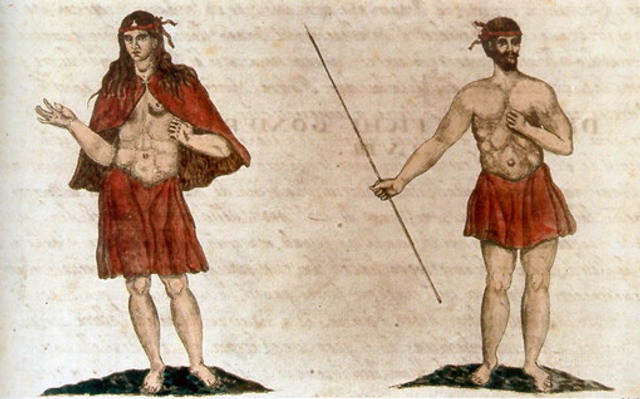
b. The People Behind the Scenes introduces the Guanches, the
native settlers
c. The Norman Conquest focuses on the private enterprise of Messier Jean de Bethencourt
d. The Royal Conquest elaborates on the final subjugation of the islands 
e. The Sugar Islands switches to the production of sugar

I'm working on the last part, the Reassessment, where I will tell the story in a nutshell, in a more prosaic way and excluding some details. 

The chapter will stay unpublished for two main reasons: I need to leave it for a while to make a better reassessment (in terms of style, cohesion, etc.) and I will think about publication opportunities. 

My plans include a continuation of the current project. According to the initial plan, there should be extracts on Madeira and the quest for the Rio d'oro (the River of Gold). These topics also belong to the theme called "The Little Age of Discovery": the onset of the oceanic exploration from the close of the thirteenth century to the end of the fourteenth century. 

Thursday, April 2, 2020

Unveiling the Rediscovered Islands 1


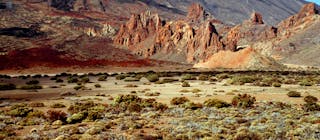
Image: At the foothills of Pico del Teide

I am hopeful you are well and sound. My best advice for those who must spend a lot of time time in isolation is to engage in your favorite activities. In my case, it is research in matters that interest me.

As you know, I have launched new research, which focuses on the European discovery of the maritime route to the Indies. I am working on Part I of the study titled "The Little Age of Discovery: The Conquest of the Western Sea". Here I tell the story of the European ventures in the eastern Atlantic throughout the fourteenth century. 

The first two chapters are complete. Chapter 1, How Wide Spans the Ocean Sea, based on the report of Herodotus, defies the idea that Africa had been circumnavigated in antiquity. It also corrects the impression that Columbus was a lone wolf obsessed with a crazy idea to find the western maritime route to the Far East. This section is available on my site 
The Russian version was published in a literary magazine. 

Chapter 2, Beyond the Pillars of Hercules, explains why the opening of the bottleneck of the Gibraltar Strait ushered in a new age of discovery. This part is available 
The Russian version is to be published until mid-May 2020. 

Meanwhile, I am writing Chapter 3 about the discovery, conquest, and colonization of the Canary Islands. The tragic story of the Guanches, the native residents, is unfolding on the backdrop of European expansion. 
 
Image: The Guanches depicted in a European late-sixteenth century book
Courtesy: 


Saturday, March 7, 2020

My first publication in a brick-and-mortar magazine

My article, "How Wide Spans the Ocean Sea", has been published in a Russian literary magazine, The Captain's Cabin, N 25, 2020. I believe it will be available to several thousand readers. 

I'm developing good working relations with the editor who looked through the abstract of my second paper and endorsed it for publication in the next issue of the magazine. This paper, "Beyond the Pillars of Hercules", explains the significance of Gibraltar Strait for launching new shipping lanes across Western Europe. Besides, the 'opening' of the Strait can be viewed as the threshold to oceanic ventures. I'm going to upload the English version of this article on my site. 

My next research is focused on the Canary Archipelago. I will try to extend the story beyond the discovery (a tricky subject in itself) and cover the conquest and colonization of the islands. 

I have also decided to collect data on the following topic: social inequality in Chalcolithic Mesopotamia. If I succeed, it will be a study on the emergence of pristine urban communities throughout Greater Mesopotamia (not only the alluvial plain, like in my book, "Dawn and Sunset"). I will also delve into the issue of the leadership of these nascent societies. 

That's all for now. I wish I could expose more.

Friday, January 10, 2020

Beyond the Pillars of Hercules (2)

I have completed the paper titled "Beyond the Pillars of Hercules". I have made loads of corrections in the draft copy and for the first time used expressions from a special glossary which I fill in on a parallel basis with my reading the topic. I am hopeful that my new article has become much more presentable. 

However, I will refrain from uploading it on the site before offering it to some magazines, many of which insist on exclusive rights. I will also appeal to Mr. Misyuk, the editor of the Russian-language literary magazine 'The Captain's Cabin' who is going to publish my previous article, 'How Wide Spans the Ocean Sea' next month. You can find this paper on my site https://www.academia.edu/41214506/How_Wide_Spans_the_Ocean_Sea

As for my second book, "The Enchanting Encounter with the East", I will address several small publishing houses which accept manuscript from authors. It should be a traditional publisher whom I will give full rights for publication. Meanwhile, I will continue uploading additional chapters from the book on my site. 

Not long ago, I resumed my interest in ancient Mesopotamia, the subject of my first book, "Dawn and Sunset". This time, I will try to understand the rise of the urban elite in the pristine cities, especially in Northern Mesopotamia, which is becoming a new bonanza of information on early urbanism. I have started compiling a dataset that I may use sometime in the future.

Meanwhile, I am gleaning info about the rediscovery of the Fortunate (Canary) Islands in the course of The Little Age of Discovery (i.e. the fourteenth century). 

Friday, January 3, 2020

Beyond the Pillars of Hercules

STS059-238-074 Strait of Gibraltar.jpg

Image: The Strait of Gibraltar viewed from the space, with Jebel Tariq on the port side and Jebel Musa to the starboard

I have written the first draft of my new research which deals with the 'opening' of the Strait of Gibraltar for Christian vessels at the end of the thirteenth century. This topic alludes to one of the chapters of the Reconquista, especially the struggle for the domination of the three ports which served the vessels wishing to enter the Strait: Tarifa, Algeciras, and Gibraltar.

My paper includes four parts. Part 1, The Evil Omen, refers to the ancient spell laid on the crossing of the Pillars of Hercules by poets and historians. However, it did not prevent ancient or medieval Mediterranean mariners from venturing into the Atlantic.

Part 2, Passing through the Eye of the Needle, discusses some weather vagaries and navigation hazards which made it difficult to transit the Strait, especially for sailing ships.

Part 3, Locking Horns in the Unceasing Crusade, points to the main reason why it took so long for the Christian vessels to unlock the maritime route across Western Europe: the presence of the Muslim fleet and the ban on docking in the ports of Al-Andalus. The Castilian crusade, which took about one hundred years, led to the Christian control over large swaths of former Muslim territories of southern Iberia and the opening of the havens for free trade and shipping.

Part 4 called "The Mediterranean Breakout", sums up the article, showing the main maritime route of European sailors through the Strait to Flanders and England, as well as the ancillary course to the Moroccan Atlantic havens.  The champions of these ventures were the Genoese and the Venetians seaman, with the rest playing the second fiddle. In my view, the 'opening' of the Strait at the close of the thirteenth century served as a springboard for spectacular voyages of European mariners in the Atlantic throughout the fourteenth century, the period which I call 'The Little Age of Discovery'.