Friday, August 9, 2019

The Trefoil of the World

Pietro Vesconte's Mappa Mundi dating the early XIV century

A chapter from my second book, "The Enchanting Encounter with the East" describes the evolution of the mappae mundi, i.e. the 'world maps' of the medieval imagination. These drawings upgrade from simple schemes of Isidore de Seville showing tripartite inhabited earth to more elaborate designs, which incorporate the Ptolemy vision (Hartman Schedel's "The Nuremberg Chronicle") or reflect geographic discoveries ( Heinrich Buntings Cloverleaf Map) or marry with sea charts (Pietro Vesconte). Like an oriental carpet, the brave medieval world of sacred and profane rolls out before your eyes. 

As usual, I would appreciate any comments. You can read this chapter on my site https://independent.academia.edu/BaizermanMichael
where you can find other papers relating either to my second book or my first one, "Dawn and Sunset: A Tale of the Oldest Cities in the Near East". 

I am preparing a lecture on the origin of ancient Israel which is scheduled on August 28th in the Science Club, Tel Aviv. 

I am taking a FutureLearn course, Searching and Researching, which is given by the University of Leeds.

Friday, August 2, 2019

How Long Spans the Inhabited World

I uploaded a new chapter on my site https://independent.academia.edu/BaizermanMichael
This is an extract from Unit I of the book, "The Enchanting Encounter with the East". 

I would appreciate any comments about both the content and the style. 

I began looking for a literary agent to represent my book before a publisher. I will have to write a query letter. 

Meanwhile, I was offered to deliver a lecture about the origin of early Israel before the audience of the scientific club in Tel Aviv. It will be my first public appearance which will take place on August 28. Wish me good luck! 

In this lecture, I am going to analyze the text of Merneptah Stele, the battle reliefs from the Karnak Temple, and the results of the archeological excavations in the central hill country of Judea and Samaria. The material is based on my old paper with numerous additions. 

Thursday, July 25, 2019

How to Measure the Earth's Circumference

Hopefully, you are perfectly aware of it. However, back in time scholars would come up with educative guesses about the Earth's circumference.

This is the story of various evaluations. I made an effort to convert ancient measures into modern ones to show you the margin of deviation. To do this, I blend all the known samples of these measures into a 'consensus value', which is the average meaning. I refer to the stadium, Arab mile, and Roman mile. I mention Eratosthenes, Posidonius, Pierre d'Ailly, Ahmad Al-Farghani, and Christopher Columbus. 

This is the second chapter of my book, "The Enchanting Encounter with the East". You can also view chapter 1: What If the Earth is the Sphere.

My website gets attention from people around the world with more than 250 hits. I intend to continue uploading other parts of my second book.

Meanwhile, I decided to review my first book, "Dawn and Sunset". I research new info about the origin of the first cities in Mesopotamia.

I got a proposal to read a lecture about the Hyksos in a public hall in Tel Aviv. I am excited since it is going to be my first public appearance. I got interested in the Hyksos while looking for a theme to enlighten the history of ancient Israel. 

Several years ago, when I was working on the paper devoted to the origins of ancient Israel, I became convinced that the Israelites are part of the land of Canaan. In other words, Exodus is a terrific myth. 

Suddenly, I got the idea for my fourth project. I should start the history of ancient Israel not with the Stela of Merneptah but with the description of the Canaanites. One of the implications is the story of the Hyksos, the members of the Canaanite elite who rose to power in the Nile Delta. I am currently collecting material for this lecture. Wish me good luck. I really need it. 

Friday, July 12, 2019

New Publications

In addition to previous publications, I uploaded three new chapters:

1) By Wheel and Wind: a focus on overland and water transportation in Ancient Mesopotamia. One of the scientists got interested in this article and we had a discussion

2) What if the Earth is the Sphere? This is chapter 1 of my second book, "The Enchanting Encounter with the East". The publishing house refused to accept it because it might not interest their readers so I will have to find another publisher. The article proves that most educated public in the Middle Ages recognized the theory of the spherical earth and envisaged it in different images. 

3) The Reappraisal of Civilization. This is an introduction to my first book, "Dawn and Sunset: A Tale of the Oldest Cities in the Near East". (together with previously downloaded The Tower of Babel.) I give my definition of civilization and outline a formula which can be applied to any ancient city, at least in the Ancient Near East.  

From now on, I decided to upload most of the chapters of my first book. I realized that before looking for a publisher for my two completed books, I need to make a sturdy platform that will attract a potential publisher. I am thinking of various ways how to do it. I will download many of my articles- up to now I penned almost 100- and will continue working on my third book. 

Wish me good luck! 

Saturday, June 29, 2019

Launching a website

Coordinators from Academia.com, a site that I use extensively in my quests, offered me to launch my website under their auspices. It is called https://independent.academia.edu/BaizermanMichael

I decided to upload most of my articles published on other sites. I started with the extracts from my first book, "Dawn and Sunset: A Tale of the Oldest Cities in the Near East". Up to now, I have transmitted four chapters:
The Divine Round Dance: The Sumerian Astronomical Calendar. This is a chapter from Unit IV, Beyond the Threshold of Rain Agriculture; it explains the importance of the introduction of the calendar in the complex society, who was in charge to keep the records, and what impact on state affairs it produced. https://www.academia.edu/39608575/The_Divine_Round_Dance_The_Sumerian_Astronomical_Calendar 

The Birth of Proto-writing. This is a chapter from Unit III, The Marvels of the Sumerian Script; it looks into the origins of cuneiform, arguably the earliest human script. A universal writing agent, it was invented by accountants to submit economic reports to their superiors. https://www.academia.edu/39623193/The_Birth_of_Proto-writing 

The Tower of Babel is a chapter from Introduction; it presents an attempt of interpretation of the iconic Biblical passage. https://www.academia.edu/39660169/Book_I_Intro_The_Tower_of_Babel

In the Workshop of a Sumerian Sculptor is a chapter from Unit V, Arts and Crafts; it relates the story of Sumerian sculptures in terms of main characters and dominating styles. The artistic side of early urban society comes to life in a series of sketches. https://www.academia.edu/39689480/In_the_Workshop_of_a_Sumerian_Sculptor

You're welcome to view them all; there will be more extracts. 

Meanwhile, I began collecting material from my third project. It is still untitled and will delve into the early modern seafaring, especially the launching of the sea route to India at the end of the 15th century. My first research question is why the Portuguese mariners played no role in the Mediterranean seafaring during the Late Middle Ages. Many more questions will follow. The research will take a few years. Wish me good luck!!!


Friday, June 21, 2019

My Canaanite Legacy


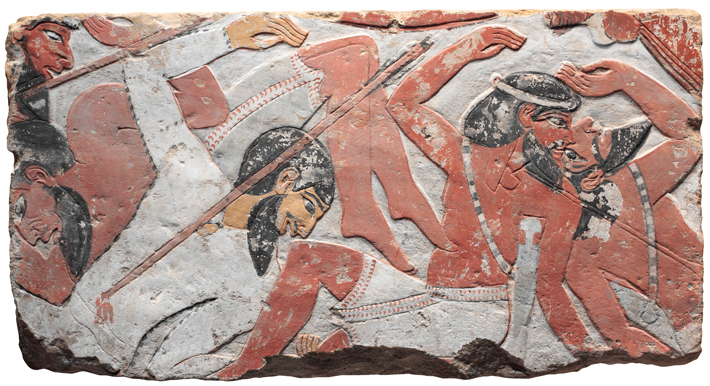
Jaffa Thebes Limestone Relief
Defeated Canaanite warriors from the painted limestone relief at Thebes

After completing my second book, "The Enchanting Encounter with the East", I returned for a while to the old plan and started to browse evidence concerning Early Israel in hope to find material for a short article. 

In the course of my recent quest, I haven't put my finger on a particular plot but I realized that the origins of Israel are hidden much deeper than their first emergence on Merneptah Stela. I believe that the People of the Book made up an offshoot of the robust tree of the West Semites and their culture sprang up from the common Canaanite background.

I was born in Moscow but my heart has driven me to the Land of Canaan. That happened years after I had repatriated to Israel, raised a family, and embarked on an ungrateful career of a high-school teacher. 

My fascination with Canaan began with the search for the origins of Early Israel. I penned an account about Exodus, where I defined this tale as a foundation myth and established a firm link between Proto-Israelites, who flooded the highlands at the climax of the Late Bronze Age (13-12 centuries BCE), and their lowland neighbors. You can view 'The Generation of Exodus'  at scriggler.com/DetailPost/Opinion/26251
You can also take a gander at my second report, 'Mesha the Dibonite Recovers His Voice', which is available at  scriggler.com/DetailPost/Opinion/27980

I asked myself: if these Proto-Israelites were part and parcel of a local ethnic Landschaft, which features of their background could prove it beyond reasonable doubt? In plain English, who were the Canaanites and what was their legacy that I can claim- in due respect- as my own? 

I have not found the answers because it's time to think about my third book. I am hopeful to return to this issue sometime in the future. 

Friday, June 14, 2019

Canaan


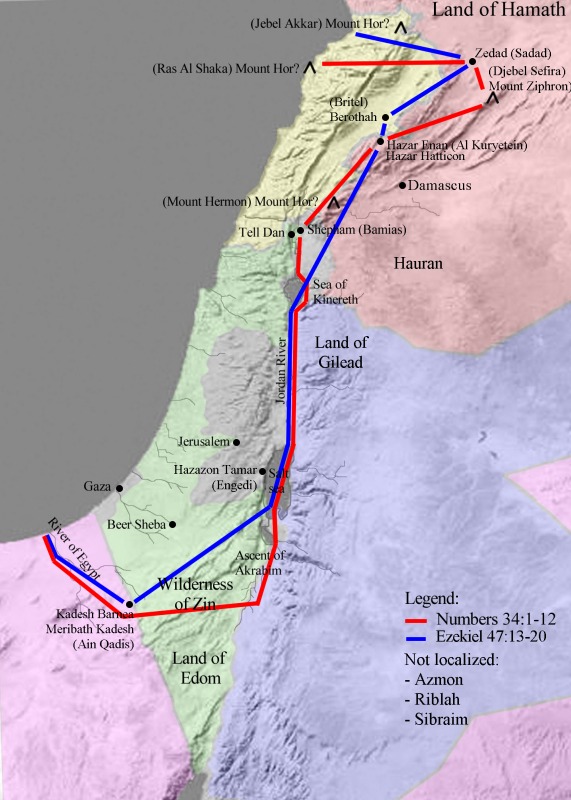
Image: The Map of Canaan According to the Bible

After finish my second book, The Enchanting Encounter with the East, I needed to take a break, approximately from mid-May to the end of June. That was the finish of the school year, so I had plenty of time on my hands. My idea was to pick up a momentous episode from the history of early Israel. This is the topic of my fourth book. 

I found so much data that it would take months, if not years, to process it. However, I became aware of what this future volume would be about. 

I support the idea that early Israel was part and parcel of Canaan, a narrow land bridge stretched between Western Asia and Egypt. Surrounded by stony deserts, it belonged to the occidental leg of the Fertile Crescent. Splashed by the great wine-dark sea, this land occupied a chunk of the eastern Mediterranean. 

This spatial corridor, craved by quite a few great powers of the ancient world and giving easy access for invaders, was populated by an array of diverse ethnic groups that shared a similar culture, language, and religion. In the Late Bronze Age (c. 1500-1200 BCE), it was swallowed by the expanding Egyptian Empire. 

My future article will focus on Canaan and Canaanites, emphasizing their common features as they are disclosed in the archeological digs committed to the periods of Middle Bronze (c. 2000-1500) and Late Bronze. Now, I am looking for any piece of information concerning the geography of the region. Later, I will check on other aspects of the topic: political development, languages & ethnography, agriculture, arts & crafts, foreign trade, social classes, law & order, warfare, and diplomacy. 

At first glance, this path resembles that of my first book, Dawn and Sunset: A Tale of the Oldest Cities in the Near East. However, in this case, the whole topic is designated as an introduction to the history of ancient Israel. In my view, the origin of the 'people of the Bible' is rooted in the local soil. 

Unfortunately, I will have to stop my quest in the near future on behalf of my new research about the Portuguese seafarers searching the maritime path to India. That is the topic of my third book. I have already written several articles about this theme but now I need to have a closer look. 

I promise to keep you informed about further developments. I appreciate any comments which can help me create a good book.